














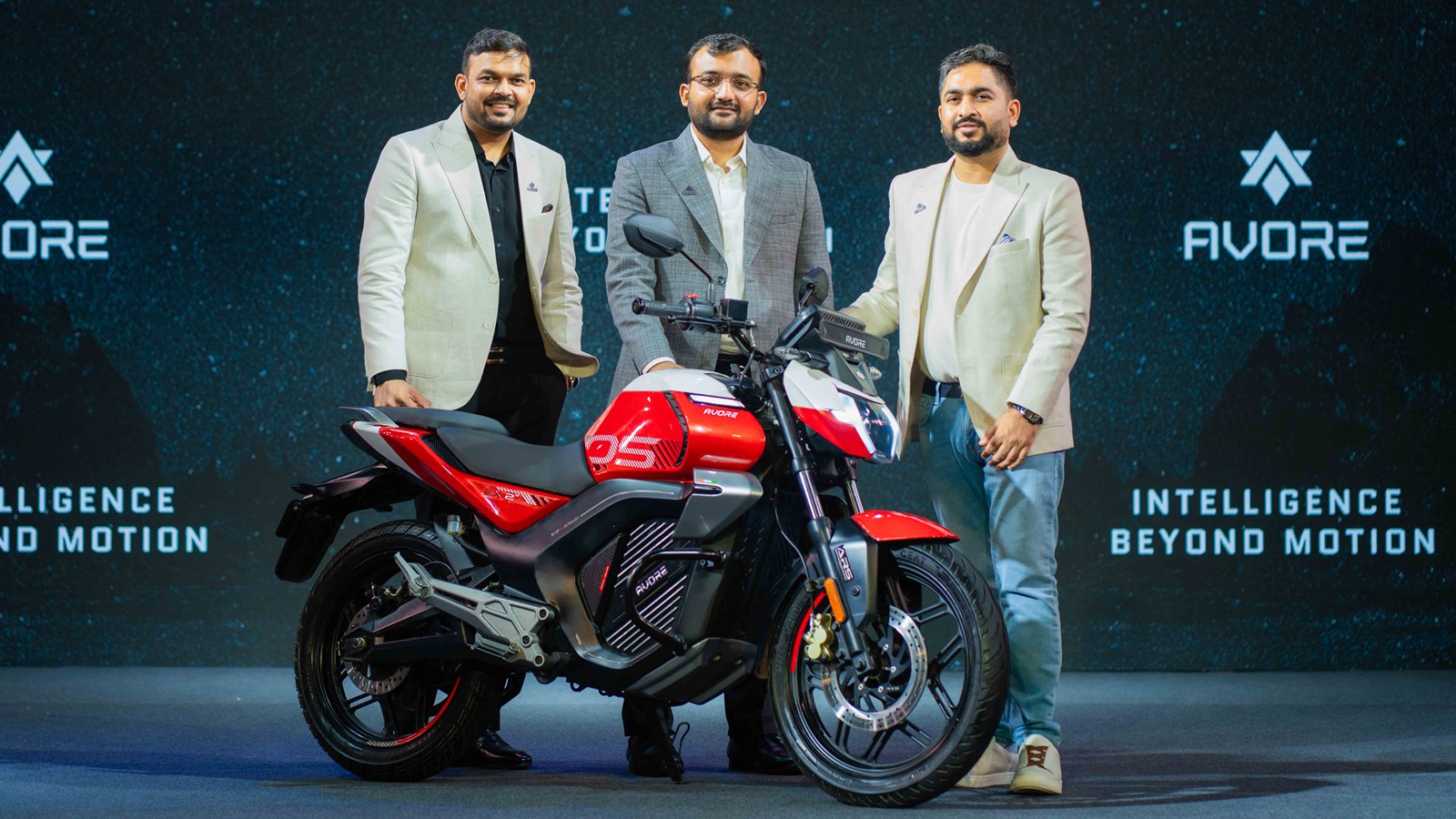
Avore Electric, operating under Samarth E-Mobility, has announced that it now sources 90% of its components domestically within India. This milestone highlights the technology-first manufacturer’s strong push toward local production and cutting down reliance on imported parts.
In-House Manufacturing of Critical EV Systems
Rather than relying purely on off-the-shelf imports, Avore Electric has built the internal capability to design, manufacture, and integrate several high-value EV technologies right at home. Its in-house component lineup includes:
- Motor controllers and digital instrument displays
- Battery packs and rare-earth-free electric motors
- Signature tank lights and position lamps
Keeping these critical technologies in-house gives the automaker tighter control over engineering, component quality, and system integration, while actively strengthening India’s indigenous electric vehicle manufacturing ecosystem.
Upskilling MSME Vendors for Automotive-Grade Precision
Building a reliable local supply chain meant partnering closely with Indian MSME vendors to bring them up to strict automotive manufacturing standards. While many domestic suppliers already possessed the necessary machinery and factory setup, achieving the precision, consistency, and process controls demanded by automotive-grade components required hands-on technical collaboration.
To bridge that gap, Avore Electric stationed its own engineering and quality assurance teams directly inside vendor facilities to refine manufacturing workflows and align production practices with automotive benchmarks. The company also rolled out Advanced Product Quality Planning (APQP) and the Production Part Approval Process (PPAP), ensuring every component clears thorough design, engineering, and tolerance validation before mass production begins.
Quality Management, Traceability, and In-House Testing
Inside its own manufacturing plant, Avore Electric adheres to strict quality management frameworks aligned with IATF 16949 and ISO 9001 standards. Key factory-floor practices include:
- Failure Mode and Effects Analysis (FMEA) integrated during product design
- Statistical Process Control (SPC) to track and control manufacturing variations
- Poka-yoke systems designed to prevent assembly-line errors
- End-to-end traceability covering components, sub-assemblies, and software versions—from raw material sourcing and assembly right through to after-sales support
Complementing these quality systems are dedicated in-house testing lines for both batteries and motors:
| Production Line | Key Manufacturing & Testing Processes |
| Battery Production Line | Automated cell grading, sorting, laser marking, wire bonding, and charge-discharge cycle testing |
| Motor Production Line | Controlled thermal processes, precision bearing assembly, and dedicated dynamometer testing prior to motorcycle integration |
Leadership Perspective on Quality Over Speed
Speaking on the localisation journey, Mr. Priyank Rakholiya, Co-founder, Samarth E-Mobility, emphasized that Avore Electric’s focus on customer-centric innovation, advanced engineering, and global safety and quality standards is directly reflected in its local sourcing approach. He noted that applying a first-principles methodology to build a compliant supply chain across Gujarat and other parts of India required deep collaboration with vendor partners—and acknowledged that this disciplined process may have extended rollout timelines following the brand’s August 2026 launch. However, he reaffirmed that quality remains non-negotiable, stating that the company would rather delay deliveries than release a motorcycle that falls short of its standards.
By combining 90% domestic component sourcing, in-house EV hardware manufacturing, and close technical partnerships with Indian suppliers, Avore Electric continues to reduce import dependency while helping build a self-reliant electric mobility ecosystem in India.
My Thoughts
“True EV localisation in India goes far beyond assembling imported kits—it means owning core tech like motor controllers, battery packs, and especially rare-earth-free motors locally. In a market where early EV startups have often struggled with supply-chain bottlenecks and quality consistency, Avore Electric’s decision to embed engineers with Indian MSMEs and prioritize APQP, PPAP, and IATF 16949 standards—even if it pushes back delivery timelines—is a refreshing, long-term approach that Indian electric motorcycle buyers will ultimately benefit from.”