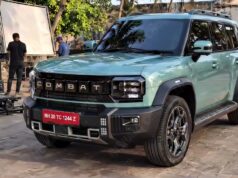













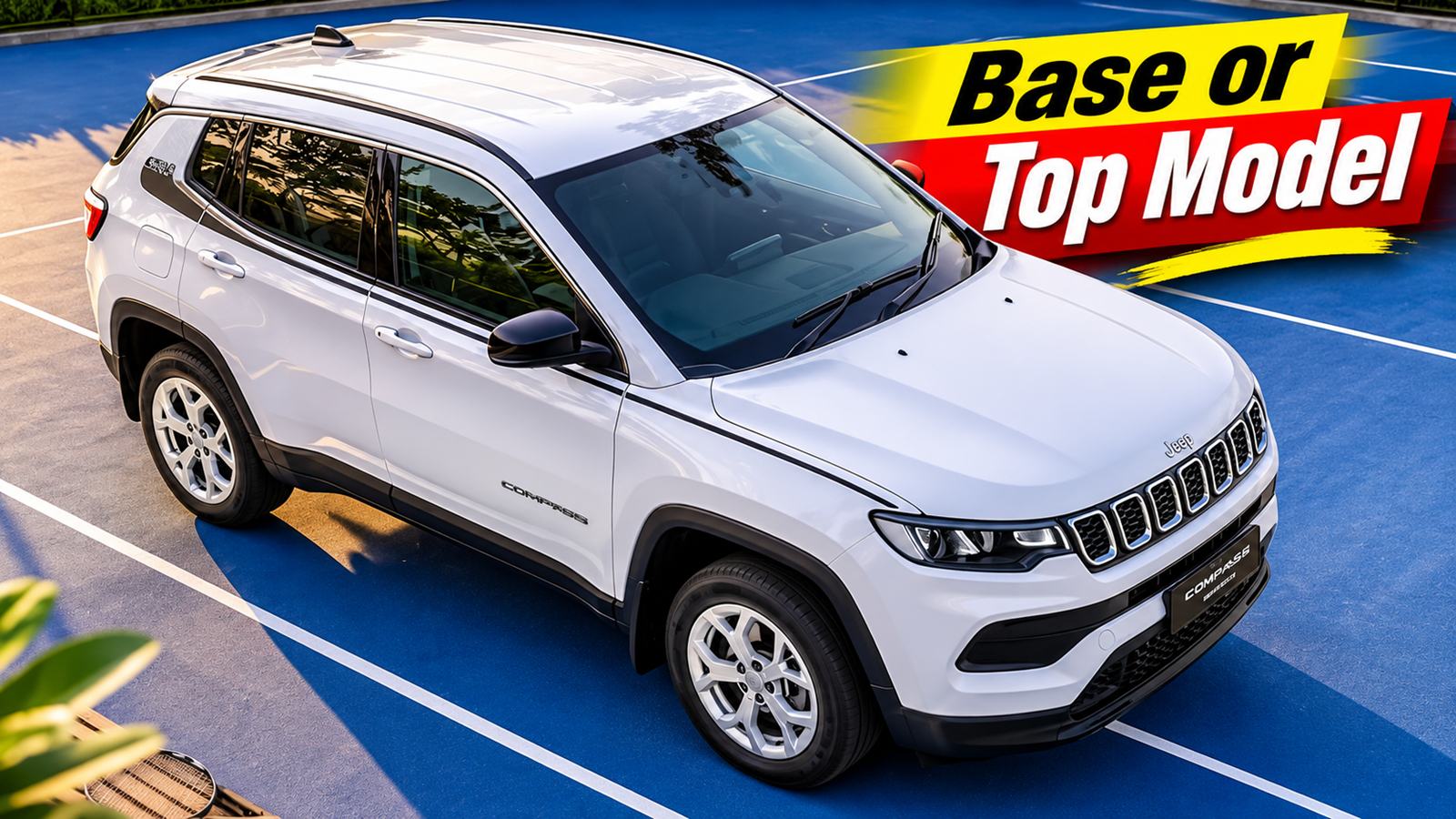
Jeep’s new Compass Sport diesel automatic brings the Compass automatic down to ₹21.99 lakh, and it puts a familiar question in front of buyers: stop at the base variant, or keep going up the range? Go all the way to the Model S (O2) automatic, the dearest two-wheel-drive version, and the price reaches ₹28.76 lakh. That is ₹6,77,000 more. Using the rupee value we give each feature, the extra equipment listed in Jeep’s brochure is worth ₹4,36,875, which covers 64% of the gap.
Is 64% good or bad? You can only tell by running the same sum on every other car, and that is the job we took on with CarMaths, a car variant comparison site. This piece explains what the results mean when you are the one signing the booking form. The car-by-car tables are in the base vs top variant analysis.
How we worked it out
CarMaths currently tracks 98 cars. On 96 of them, at least two variants share one fuel and one gearbox (the MG Hector Plus and MG Majestor are the exceptions). For each of those 96 we took the longest such range and compared its cheapest variant with its dearest. Holding the gearbox fixed matters, because an automatic is a different purchase from a longer equipment list.
Next comes the valuation. We put a rupee value on each of 77 features, from a rear defogger to a Level 2 ADAS suite, and scale it by segment, from ×0.70 on an entry hatchback to ×1.25 on a large premium SUV. Every value and the reasoning behind it is published on our methodology page.
Add up what the dearer variant gains, subtract anything it loses, and divide by the price gap. That share is the “covered” figure in this article. We call 100% or more “worth it”, 60% to 99% “fair”, and anything lower “pricey”. These are our own valuations, used as a yardstick. They are not what a maker spends on the parts.
How big is the jump from base to top?
The typical top variant costs 35% more than its base, a median of ₹3,26,350 ex-showroom. Half the cars sit between 21% and 46%. The added equipment covers a median 68% of the gap, so on a typical car about two-thirds of the money comes back as features we can price. Only 7 of the 96 reach 100%, 29 rate pricey, and the other 60 land in fair.
Here is how that looks on a dozen cars buyers ask about, sorted by how much of the gap is covered.
| Car and range | Base | Top | Price gap | Equipment added | Covered |
| Maruti Baleno, 1.2 petrol manual | Sigma ₹5,98,900 | Alpha(O) ₹9,49,900 | ₹3,51,000 | ₹3,28,525 | 93% |
| Hyundai Creta, 1.5 petrol manual | E ₹10,90,700 | King ₹17,27,800 | ₹6,37,100 | ₹5,73,000 | 89% |
| Honda Amaze, 1.2 petrol manual | V ₹7,65,400 | ZX ₹9,39,400 | ₹1,74,000 | ₹1,55,550 | 89% |
| Maruti Brezza, 1.0 turbo manual | LXi ₹7,49,900 | ZXi+ ₹11,25,900 | ₹3,76,000 | ₹3,19,700 | 85% |
| Hyundai i20, 1.2 petrol manual | Era ₹5,99,700 | Asta(O) ₹9,24,700 | ₹3,25,000 | ₹2,43,950 | 75% |
| Mahindra Thar Roxx, 2.2 diesel manual | MX1 ₹14,23,000 | AX7L ₹19,57,000 | ₹5,34,000 | ₹3,70,975 | 69% |
| Jeep Compass, 2.0 diesel automatic | Sport ₹21,99,000 | Model S (O2) ₹28,76,000 | ₹6,77,000 | ₹4,36,875 | 64% |
| Maruti Swift, 1.2 petrol manual | LXi ₹5,83,900 | ZXi+ ₹8,28,900 | ₹2,45,000 | ₹1,50,450 | 61% |
| Mahindra XUV 7XO, 2.2 diesel manual | AX ₹15,36,499 | AX7L ₹23,40,499 | ₹8,04,000 | ₹4,78,750 | 59% |
| Tata Harrier, 1.5 turbo petrol manual | Smart ₹12,99,990 | Fearless Ultra ₹22,94,990 | ₹9,95,000 | ₹5,55,625 | 55% |
| Maruti Ertiga, 1.5 petrol manual | LXi ₹8,90,000 | ZXi+ ₹11,79,100 | ₹2,89,100 | ₹1,48,675 | 51% |
| Maruti Alto K10, 1.0 petrol manual | STD(O) ₹3,69,900 | VXi+(O) ₹4,99,900 | ₹1,30,000 | ₹18,900 | 14% |
Ex-showroom prices, all checked by CarMaths since 25 October 2026.
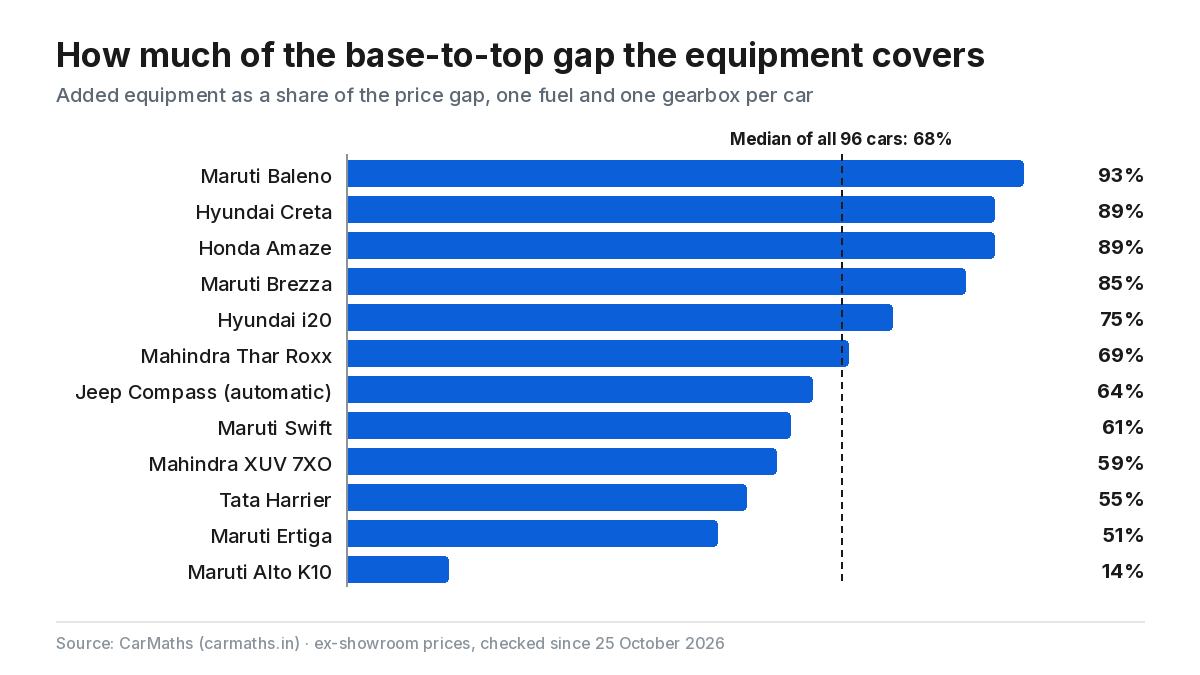
Image 1: The share of the base-to-top price gap covered by added equipment, on the 12 cars above. Source: CarMaths.
A large gap does not mean poor value, and a small one does not mean good value. The Creta’s climb costs more than twice the Ertiga’s, yet the Creta’s is 89% covered and the Ertiga’s only 51%.
Where in the range the money works hardest
Comparing only the two ends hides the most useful pattern, so we also sorted every upgrade by where it sits in its range. This covers ranges of four or more variants: 475 upgrades in 128 ranges, across 68 cars. Option-pack versions are left out, as are 4 upgrades that move onto a parallel line carrying less equipment.
| Where in the range | Upgrades | Typical cost | Equipment covers | Rated pricey |
| First upgrade off the base | 128 | ₹1,00,000 | 54% | 57% |
| Upgrades in the middle | 219 | ₹1,00,600 | 72% | 36% |
| Last upgrade to the top | 128 | ₹91,500 | 65% | 42% |
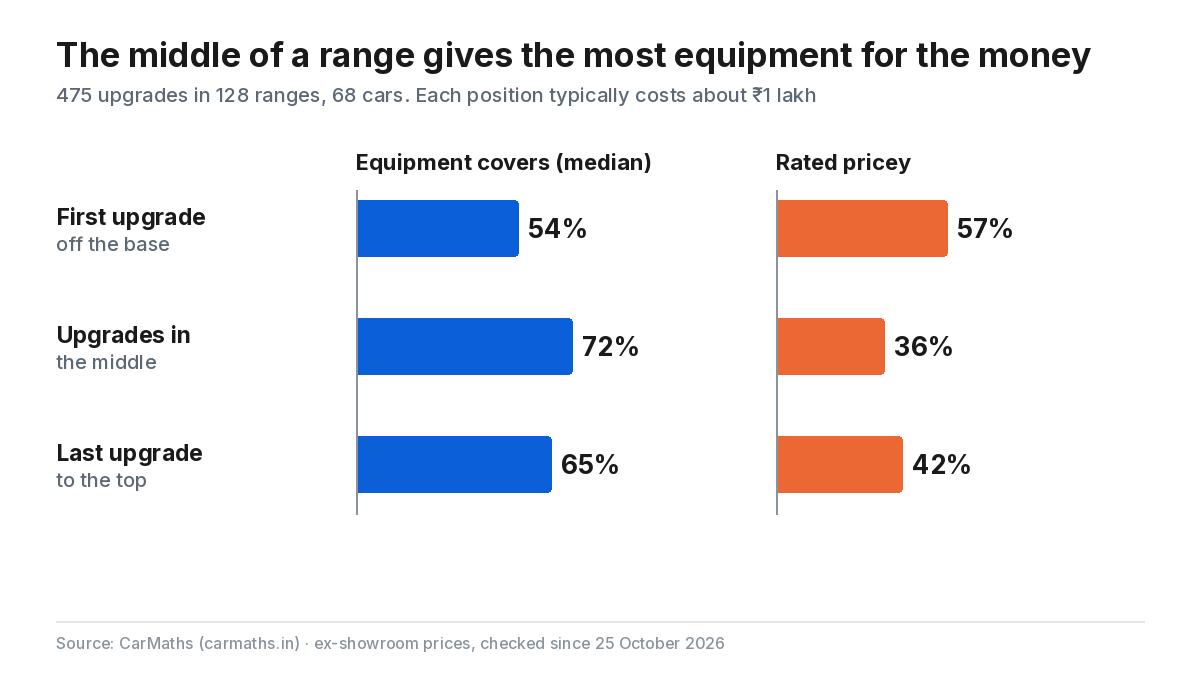
Image 2: First, middle and last upgrades compared, across 475 upgrades. Source: CarMaths.
The first upgrade and a middle one cost almost the same, about ₹1 lakh, but they do not buy the same amount. Taken range by range, the best-covered upgrade sits in the middle in 68 of the 128 ranges. Chance alone would give about 56, because the middle holds the most upgrades. The worst-covered upgrade is the first one in 51 ranges, against about 36 by chance.
The Maruti Swift shows both the pattern and its limits.
| Upgrade | Costs | Equipment added | Covered |
| LXi to VXi | ₹84,000 | ₹27,200 | 32% |
| VXi to VXi(O) | ₹26,000 | ₹5,950 | 22% |
| VXi(O) to ZXi | ₹68,000 | ₹73,950 | 108% |
| ZXi to ZXi+ | ₹67,000 | ₹43,350 | 64% |
The first upgrade buys a 7-inch touchscreen and a handful of smaller conveniences. The next one is a middle upgrade and still weak, since ₹26,000 buys keyless entry with push-button start and nothing else we track. Then comes the one that stands out: ₹68,000 brings alloy wheels, LED headlamps, automatic climate control, a wireless charger, rear AC vents and more. Medians describe the market, so always walk through your own car’s list.
What each end of the range adds
The two ends of a range sell different things. Not one feature appears in both top-five lists below, each counted across 128 upgrades.
Most often added by the first upgrade off the base:
- Wireless Android Auto (39)
- Steering-mounted controls (38)
- Electrically adjustable outside mirrors (35)
- Cruise control (28)
- Keyless entry with push-button start (27)
Most often added by the last upgrade to the top:
- Surround view camera (33)
- Leatherette upholstery (32)
- Front ventilated seats (29)
- Powered co-driver seat (25)
- Level 2 ADAS suite (24)
So a buyer who mainly wants Android Auto and steering controls can often stop early, while one who has set their heart on ventilated seats or ADAS may have to go most of the way up.
What the percentage cannot tell you
- Materials and finish. We price listed equipment only. Dashboard materials, door panels and upholstery quality are not in the sum, and part of the remaining gap pays for them.
- Basics we do not price. Air conditioning is not on our list. The Alto K10’s ₹30,000 move from STD(O) to LXi(O) buys air conditioning and power steering and scores zero, so that car’s 14% reads lower than it feels.
- Your own priorities. A panoramic sunroof is worth nothing to someone who will never open it. CarMaths comparison pages let you change any value and watch the verdict recalculate.
- Engine changes. On 5 of the 96 ranges the engine output also changes on the way up. On the Scorpio N diesel manual, the top variant has 43 PS more than the base. Equipment alone understates what those buyers get, so none of the five is in our table above.
- The on-road price. Road tax and insurance are charged on the car’s price, so the gap grows after the showroom. The Swift’s ₹2,45,000 climb becomes ₹2,94,358 on the road in Delhi and ₹2,95,764 in Karnataka.
How to use this in the showroom
- Compare variants with the same engine and gearbox. Otherwise you are paying for a different powertrain as well as more features.
- Look at every upgrade separately, starting from the middle of the range, and do not settle for a choice between base and top.
- Cross out the features you would not use, then put your own value on the rest.
- Check the variant just above your choice. On the Swift, ₹68,000 from VXi(O) to ZXi brings more equipment by value than the previous two upgrades together, which cost ₹1,10,000.
- Ask for on-road quotes on both variants and compare those, since that is the gap you will actually pay.
- Price accessory packs separately. They are not in any of these figures.
Back to the Compass
The Compass automatic runs against the usual pattern. From the Sport, the Longitude (O2) costs ₹3,71,000 more and is 56% covered, even with a panoramic sunroof in the mix. The Limited (O) adds ₹1,20,000 at 59%. The last upgrade, to the Model S (O2), is ₹1,86,000 at 82%, thanks to ventilated seats, a branded sound system and a surround view camera. On this car, the final upgrade is the best covered.
One detail changes these numbers. Jeep’s October 2026 brochure lists six airbags as an option on the Sport, while launch reports say the Sport automatic comes with them. If they are standard, the equipment added on the way up falls to ₹3,99,375, the whole climb drops to 58% and the first upgrade to 46%, which makes the base automatic stronger value than our table shows. Before you book, confirm the airbag count and the current introductory price on Jeep’s official Compass page.