


















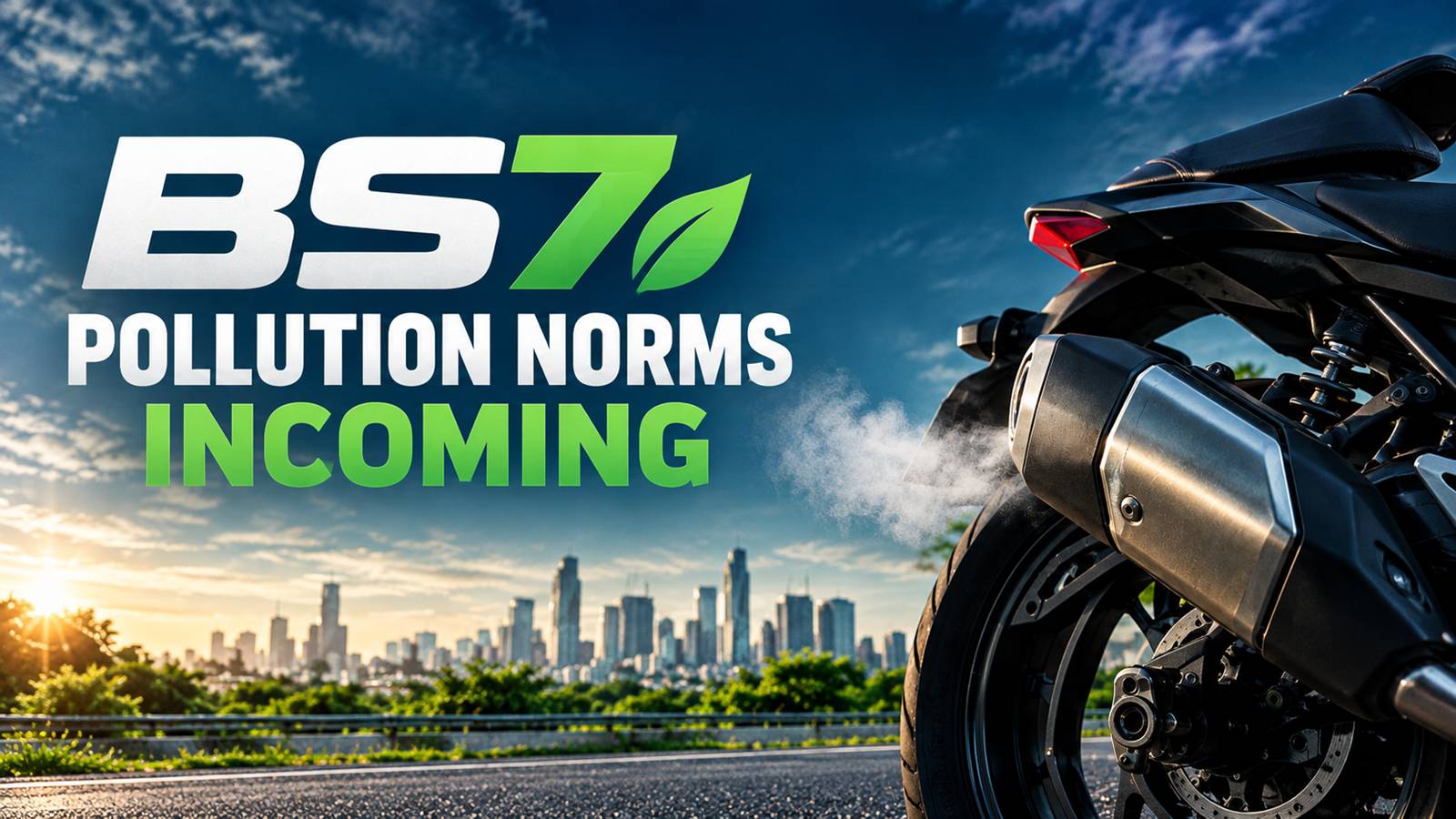
The Ministry of Road Transport and Highways (MoRTH) has approved a proposed roadmap for rolling out Bharat Stage 7 (BS7) emission norms in India from April 2029, as per a report by The Economic Times. Aligned with Europe’s stringent Euro 7 standards, the new rules will be introduced in a phased manner spanning six years and wrapping up by April 2035.
Importantly, the proposed standards will apply only to newly manufactured vehicles from their respective deadlines. Existing on-road vehicles, including those compliant with BS6, will remain unaffected by this transition.
Proposed Phased Rollout Timeline
- Passenger Vehicles: New passenger cars will be covered under the first phase starting from April 2029.
- Light Commercial Vehicles: Pick-up vans and light commercial vehicles (LCVs) are scheduled to fall under the norms from 2030.
- Heavy-Duty Vehicles: Trucks and heavy buses will adopt the BS7 standards starting from April 2031.
- Two-Wheelers: A distinct timeline for two-wheeler implementation is yet to be announced.
Key Technical Focus Areas and Emission Limits
- Non-Exhaust Emissions: For the first time, the framework expands beyond tailpipe emissions to regulate non-exhaust particulate matter caused by tyre abrasion and brake wear.
- Tighter Particulate Size Rules: While most gaseous pollutant limits for passenger cars remain identical to BS6 levels, the minimum particle size measured under particulate-number testing is being dropped from 23 nanometres down to 10 nanometres to capture finer particles.
- Heavy-Duty Emission Cuts: Heavy commercial vehicles face targets aimed at cutting major pollutants by 20 to 50 percent.
- Real-World Testing: The norms mandate strict real-world driving condition checks and allow independent testing agencies to evaluate post-sale vehicle compliance on roads.
The proposed regulations are currently in the draft stage, meaning implementation dates and technical requirements could undergo revisions before final notification. It is also unclear how the Government is planning to move ahead with the Ethanol dilemma, as the fuel type also plays a huge impact on pollution.
My Thoughts
“Transitioning to BS7 emission norms by 2029 shows India’s clear commitment to staying on par with global environmental standards like Euro 7. Bringing non-exhaust pollution like tyre wear and brake dust under regulatory scrutiny is a huge, progressive step for urban air quality, where micro-particles are a major health concern. I wish they also consider regulating the type/grade of plastics being used as well, especially in cabin interiors.”
— Avin Richards