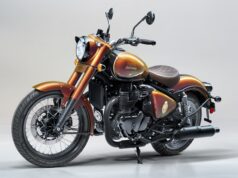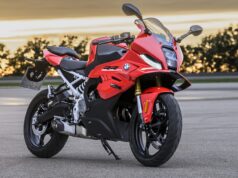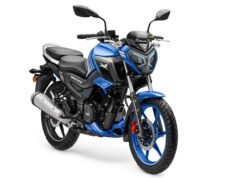






















For decades, the Indian motorcycle market was clearly defined by the “commuter” and the “enthusiast.” The line between them was quite clear. If you rode a 100cc bike, you were a pragmatist; if you rode a 350cc machine, you were making a statement. However, the global landscape and domestic engineering have evolved.
Today, the 350cc to 500cc segment is the fastest-growing “mid-size” category in the world. The companies that are catering to this segment either directly or indirectly are primarily Indian. Yet, India’s fiscal policy remains anchored to an era that no longer exists. Currently, motorcycles are treated as luxury goods and how is luxury defined? By your cubic capacity!
If the idea was to tax “powerful” motorcycles, which in some twisted way can be attributed as luxury, then like in mature markets, the Tax should have been on Horsepower rather than on cubic capacity. You currently have motorcycles in India with 650cc twin cylinders producing 47 PS and also have 350cc singles producing 40 PS. The “cubic capacity” argument literally falls apart here.
The 350cc cap will now send most manufacturers down a rabbit hole trying to squeeze out the most power from a 300-350 and the Indian market will end up with engines of similar character, all peaky and high revving and missing the real usable bit – torque.
The manufacturers will also need to have separate models for India and the global market. This, at a time when the global markets are now more receptive of the 350 – 500 cc category. A space, we as a country had just started shining in. Imagine a scenario where the Royal Enfield Himalayan 450 ends up being a more affordable buy abroad than in India, in a country with a free trade agreement or some other arrangement.
There is a powerful, logical argument to be made that the 18% GST bracket should be extended to all motorcycles and scooters up to 500cc. This shift isn’t just about making “big bikes” cheaper; it’s about safety, global competitiveness for our companies, and acknowledging the changing definition of essential mobility in a modern economy.
The “Luxury” Fallacy: Redefining the 350cc-500cc Segment
The primary justification for keeping two-wheelers above 350cc in the 40% GST bracket is that they are “sin goods” or luxury items. While this might hold water for a ₹20 lakh superbike, it is a gross mischaracterization of a 400cc motorcycle in 2026.
- The Middle-Class Aspiration: For a significant portion of India’s workforce, a 400cc bike is not a weekend toy; it is a primary mode of transport that offers the durability needed for long-distance commuting and touring.
- Infrastructure Evolution: As India’s highway network expands, the need for vehicles capable of maintaining 80-100 km/h safely and effortlessly has increased. A 100cc bike is pushed to its absolute mechanical limit at these speeds, whereas a 450cc engine operates within its comfort zone, offering better stability, safety and longevity.
By capping the “affordable” tax bracket at 350cc, the government inadvertently penalizes riders who are looking for better performance and safety for their daily transit.
Safety is Not a Luxury
Perhaps the most compelling reason to lower the tax on engines up to 500cc is the inherent safety benefits that come with higher-displacement machines. In the world of motorcycling, power is often a safety feature.
The Power Reserve Factor
When a rider needs to overtake a long trailer on a single-lane highway, a 150cc bike often lacks the “punch” to complete the maneuver quickly, leaving the rider exposed in the opposite lane for longer. A 400cc or 500cc engine provides the necessary torque to exit dangerous situations swiftly.
Superior Hardware
Manufacturers typically bundle better safety tech with larger engines. By making the 350cc-500cc segment more affordable through an 18% GST rate, the government would be incentivizing the adoption of:
- Dual-Channel ABS: Standard on almost all 400cc+ bikes, but often skipped on budget 125cc models.
- Traction Control: Increasingly common in the mid-size segment.
- Better Braking Systems: Larger discs and multi-piston calipers that significantly reduce stopping distances.
Taxing these safety-heavy machines at the same rate as demerit goods like tobacco is a policy contradiction that ignores the goal of reducing road fatalities.
Boosting the “Make in India” Global Hub
India is already the world’s largest manufacturer of two-wheelers. However, the global market is shifting toward the 400cc-500cc “Goldilocks” zone. European and American riders are moving away from heavy, expensive liter-class bikes in favor of agile, mid-capacity machines.
Creating Economies of Scale
If the domestic tax rate for the 350cc-500cc segment is slashed to 18%, domestic demand will skyrocket. This internal volume allows Indian manufacturers (and foreign players with Indian plants) to achieve massive economies of scale.
“When the home market is strong, the export product becomes cheaper and more competitive.”
By keeping taxes high on this specific displacement, we are effectively stifling the very segment that has the most potential for global export dominance. We are forcing manufacturers to focus on “India-specific” low-capacity engines rather than “Global-standard” mid-capacity engines.
The Environmental Paradox: Efficiency vs. Emissions
There is a common misconception that larger engines are significantly “dirtier.” In the era of BS6 Phase 2 (OBD-2) emissions norms, this gap has narrowed significantly.
A modern 400cc liquid-cooled engine is an engineering marvel. Because it doesn’t have to work as hard as a 150cc engine to maintain cruising speeds, its real-world thermal efficiency is remarkably high. Furthermore, by moving the threshold to 500cc, the government would encourage manufacturers to invest in higher-quality materials, different engine configurations and more efficient cooling systems that are cost-prohibitive under a 40% tax regime.
Lowering the GST would also bridge the price gap between internal combustion engine (ICE) bikes and high-performance electric two-wheelers, creating a more competitive market that drives innovation across both powertrains.
Economic Stimulus and the “Revenue Neutral” Argument
Sceptics argue that moving from 40% to 18% GST would result in a massive loss for the exchequer. However, the Laffer Curve suggests otherwise.
In the automotive sector, demand is highly elastic. A 10% reduction in the total price of a ₹3 lakh motorcycle (achieved by dropping GST by 10%) could lead to a 25-30% increase in sales volume.
- Ancillary Growth: More bike sales mean more revenue from registration fees, road tax, insurance GST, and after-sales service.
- Employment: Increased demand leads to more jobs in manufacturing, dealership networks, and the custom aftermarket industry.
The “lost” revenue from the 10% GST cut is often recovered—and then some—through the sheer volume of transactions and the health of the surrounding ecosystem.
Aligning with Modern Displacement Standards
The 350cc limit feels arbitrary because it is. Historically, it was likely influenced by the dominance of a single brand in the Indian market. However, the global “A2” license category in Europe—a massive market for exports—caps at 35kW (roughly 47 bhp), which usually equates to engines in the 400cc to 500cc range.
By aligning our tax structure with the 500cc threshold, India synchronizes its internal economy with international standards. This allows a manufacturer to build a single “Global 500” platform that is equally viable for a rider in Pune and a touring enthusiast in Paris.
A Vision for the Future
The 2 wheeler is the backbone of Indian mobility, the Indian motorcycle industry is quite literally powering the global motorcycling industry in more ways than one. It is the vehicle that takes the student to college, the entrepreneur to their first shop, and the worker to the office/factory. To treat any motorcycle below 500cc as a “luxury” is to ignore the reality of Indian roads and the aspirations of the Indian people.
Moving to an 18% GST rate for motorcycles up to 500cc would be a landmark move. It would:
- Make safer, higher-quality vehicles accessible to the masses.
- Solidify India’s position as the global manufacturing hub for mid-size bikes.
- Provide an economic stimulus to the automotive sector.
- Modernize a tax code that hasn’t kept pace with technological advancement.
It is time to stop viewing the 400cc rider as a “big spender” and start seeing them for what they are: a vital participant in a modern, fast-moving economy who deserves a vehicle that is safe, efficient, and fairly taxed. The road to a larger economy is paved with many things—and a more affordable, more powerful two-wheeler market should certainly be one of them.