
















When it comes to motorcycle mods, the “Performance Air Filter” is often the first thing riders buy. It’s affordable, easy to install, and promises to make your bike breathe like a marathon runner instead of a smoker. But does it actually do anything for your performance, or are you just paying for a fancy sticker and a louder intake?
To understand the effects of a high-flow filter, you have to look at your engine as a giant air pump. The more air you can pump in and out, the more power you can potentially make. Here is the deep dive into how changing your air filter affects performance, sound, and the health of your engine.
The Core Performance Effects
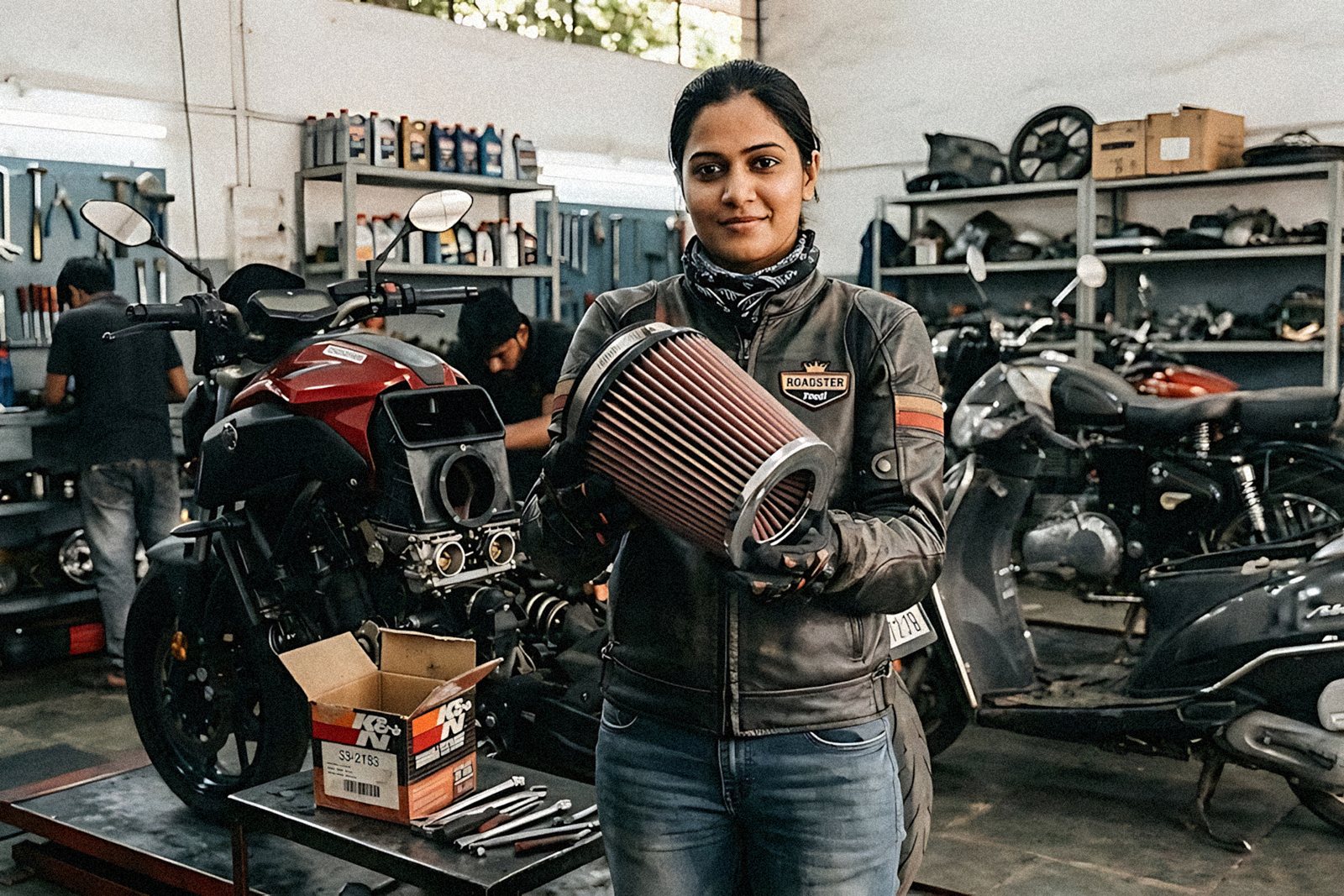
Most stock motorcycles come with a pleated paper filter. These are great at stopping dust, but they are thick and restrictive. Performance filters (like K&N, BMC, or DNA) use oiled cotton gauze or multi-layer foam.
Horsepower and Torque Gains
On a modern, stock motorcycle, a high-flow air filter alone usually provides a 1% to 3% increase in horsepower. On a 50hp bike, that’s about 0.5 to 1.5hp—hardly enough to feel in your “butt-dyno.” However, the real gain isn’t in the peak number; it’s in the volumetric efficiency. By reducing the effort the engine spends “sucking” air through a thick paper barrier, the engine can reach its peak torque slightly faster.
Throttle Response
This is where most riders actually notice a change. Because the air can move into the intake manifold with less resistance, the delay between “twist” and “go” is reduced. The bike feels “snappier” or more “eager” in the low to mid-range.
The Pros and Cons
The Pros
- Reusability: Unlike stock filters that you toss every 5000-8000 kms, performance filters are washable and reusable. They can literally last the lifetime of the bike.
- Fuel Efficiency: In theory, a cleaner, freer-flowing filter allows for more efficient combustion. However, this is often offset by the rider twisting the throttle more to hear the sound!
- Environmental Impact: Less waste in landfills since you aren’t throwing away plastic and paper housings every year.
- Cost-Effective over Time: While they cost 3x more upfront, they pay for themselves after 2 or 3 service intervals.
The Cons
- Filtration Efficiency: This is the big debate. To let more air in, the “holes” in the filter media are technically larger. While the oil on the gauze traps dirt, many tests show that high-flow filters allow more microscopic particulates into the engine than OEM paper.
- Maintenance Hassle: You can’t just “install and forget.” You have to wash them, let them dry completely, and then re-oil them perfectly. Too much oil can gunk up your sensors; too little and you aren’t filtering anything.
- Initial Cost: You’re looking at Rs. 3000-6000/- compared to a Rs 1000/- or less stock filter.
Carbureted vs. Fuel Injected (EFI) Engines
This is the most critical part of the upgrade. Changing the air filter changes the Air-Fuel Ratio (AFR).
The Fuel Injected (EFI) Scenario
Modern bikes use an ECU (Electronic Control Unit) and an O2 sensor.
- The Adaptation: When you install a high-flow filter, the O2 sensor detects a “lean” condition (too much air, not enough fuel). Within a certain limit, the ECU can automatically increase fuel delivery to match.
- The Limit: However, most factory ECUs have a limited “trim” range. If you add a high-flow filter and an exhaust, the ECU might hit its limit, leaving the bike running lean, which causes the engine to run hotter and potentially damage valves.
The Carburetted Scenario
Carbs are purely mechanical and cannot adapt.
- The Lean Stumble: If you put a high-flow filter on a carb bike, it will almost certainly run lean. You’ll notice “popping” on deceleration, a “flat spot” when you hammer the throttle, and a high-idling engine that takes forever to come down.
- The Fix: You must rejet the carburetor. This involves physically opening the carb and replacing the tiny brass jets with larger ones to allow more fuel to balance out the extra air.
Supporting Modifications: The “Stage 1” Build
An air filter is just one half of the breathing cycle. If you let more air in but still have a restrictive stock exhaust, the performance gains are “bottlenecked.” To truly see a difference, you need:
- High-Flow Exhaust: A slip-on or full system allows the extra air to exit the engine as quickly as it entered.
- Fuel Management:
- For EFI: An ECU Flash or a piggyback controller (like a Power Commander). This overrides the factory settings to provide the extra fuel the high-flow filter demands.
- For Carbs: A “Jet Kit” that includes various sizes of main and pilot jets to tune the bike perfectly.
- Velocity Stacks (Optional): These sit inside the airbox and smooth out the turbulence of the incoming air, further sharpening throttle response.
The Change in Sound
For many, this is the best part and are happy with just this. A performance air filter changes the Induction Noise.
- The “Intake Growl”: Instead of the muffled, vacuum-cleaner sound of a stock airbox, you’ll hear a deep, throaty whoosh or growl from under the fuel tank when you open the throttle.
- Pod Filters: If you remove the airbox entirely and use “Pod” filters (common on Cafe Racers), the sound is significantly louder and more “mechanical.” You can actually hear the slides in the carburetors moving and the air being sucked into the cylinders.
Is it Worth It?
If you are looking for a massive power boost, an air filter alone will disappoint you. However, if you view it as the foundation for future mods (like an exhaust and a tune), it is an essential first step.
It makes the bike sound better, feel more responsive, and saves you money on replacement parts in the long run. Just remember: if your bike starts “popping” or feeling jerky after the install, it’s telling you it’s hungry for more fuel—don’t ignore the tuning!