


















If you’ve been keeping an eye on the Indian automotive scene, you’ll know that things are moving fast when it comes to what we put in our tanks. Union Road Transport Minister Nitin Gadkari has been a long-time champion of alternative fuels, and his latest “E100” vision is set to turn the industry on its head. From draft rules for high-blend ethanol to bikes and cars that literally run on alcohol we are in for more changes and very soon too.
The Big Move to E85 Fuel
India is officially stepping up its game. While E20 petrol (a blend of 20% ethanol and 80% petrol) became mandatory across all states on 1 April 2026, the government is already looking at the next level: E85.
Draft rules for E85—a fuel grade containing up to 85% ethanol and just 15% petrol—are expected to be notified very soon. According to senior officials, there is already a solid “market consensus” and preliminary testing on vehicles has been successfully completed. This new fuel will be sold as a separate grade, distinct from the E20 we see today, thankfully.
Gadkari’s E100 Dream: 100% Ethanol Power
Minister Nitin Gadkari isn’t stopping at 85%. He has been vocal about his goal for 100% ethanol blending (E100). He’s already been spotted cruising around Delhi in a Toyota flex-fuel prototype that runs entirely on ethanol, proving that the tech is ready for the real world.
The logic is simple: India currently imports roughly 90% of its oil, and with global energy crises and conflicts in the Middle East causing price spikes, the government wants a “home-grown” solution. By using surplus sugarcane, maize, and damaged grains to produce ethanol, India can support its farmers while cutting down on expensive foreign crude.
What This Means for Your Bike and Car
Before you rush to the pumps, there’s a catch. You cannot just pour E85 or E100 into a standard petrol engine. And for that matter not even into a E20 ready machine.
- Engine Tech: High alcohol content is corrosive to standard seals, hoses, and fuel systems.
- Flex-Fuel Vehicles (FFVs): To run on E85, cars need specific Flex-Fuel engines. These are designed to handle anything from pure petrol to E85 or even E100.
- The Infrastructure: Petrol stations will need dedicated dispensing nozzles and storage tanks for E85 alongside existing E20 pumps.
The roll-out for these high-blend fuels is expected within the next “couple of years,” giving carmakers a tight window to start manufacturing compatible engines.
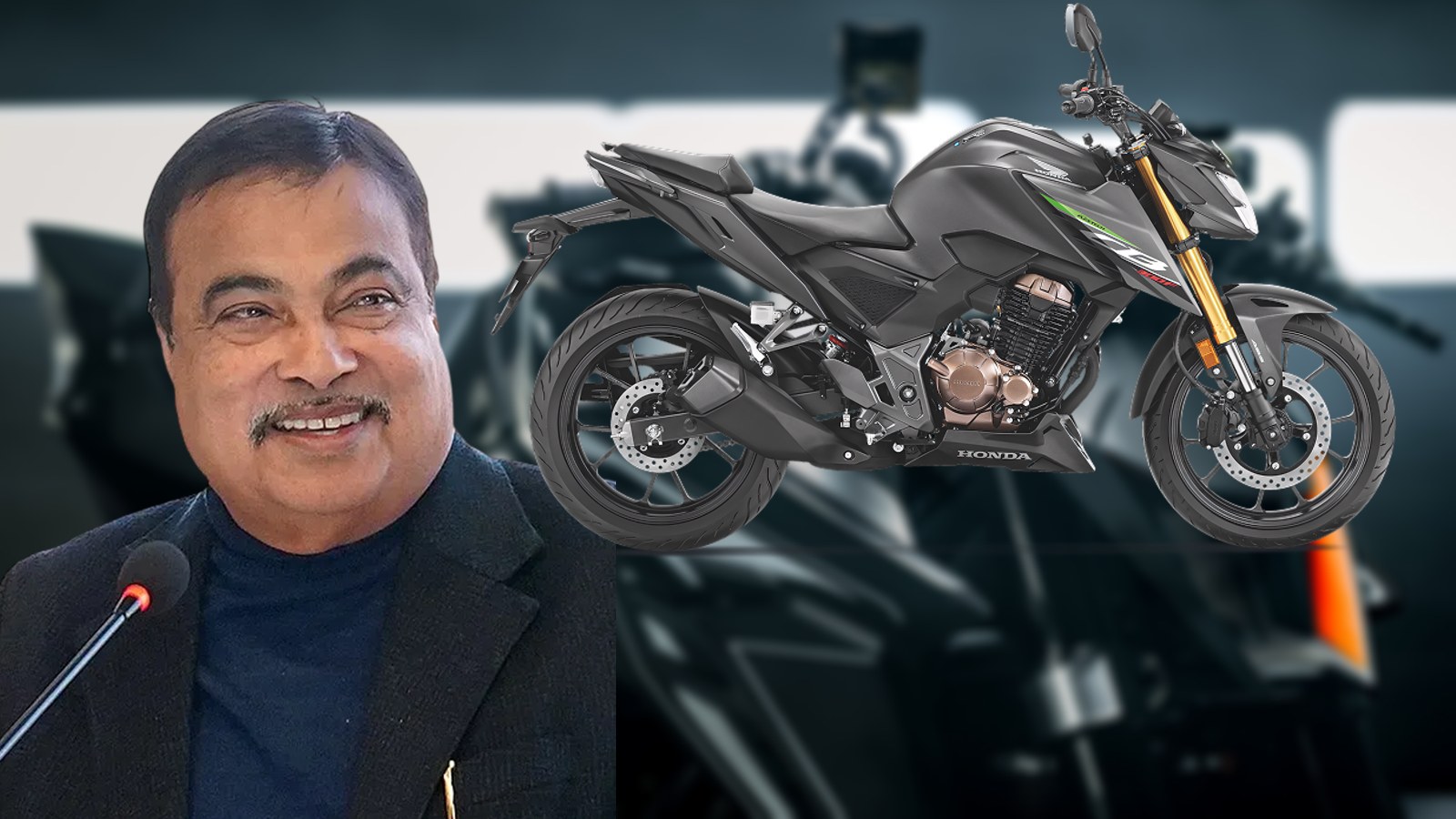
Currently the only 2 wheeler compatible with Flex Fuel (E85) in India is the Honda CB300F FlexTech. There are however couple more in the pipeline like the – TVS Raider 125 Flex-Fuel, TVS Apache RTR 160 4V FI Flex-Fuel, Bajaj Flex-Fuel Prototypes, Yamaha FZ-S FI Flex-Fuel and Suzuki Avenis / Access Flex Fuel.
The Benefits (and the Hurdles)
The transition to ethanol fuel in India isn’t just about saving money at the docks; it’s a massive win for the environment. Ethanol is a renewable energy source that burns much cleaner than pure fossil fuels, helping to tackle urban pollution. But it takes a toll on the current generation of vehicles in multiple ways. Right now, even the E20 transition has effects such as lower mileage, lower engine life, higher corrosion and heating issues on the non E20 compatible 2 and 4 wheelers.
However, there are other challenges to face too:
- Fuel Efficiency: Flex-fuel vehicles often see a slight dip in mileage compared to pure petrol.
- Investment: Oil companies and car manufacturers will need to spend big on new infrastructure and R&D at short notice.
- Aviation: Interestingly, the surplus ethanol isn’t just for cars. India is also targeting a 1% blending goal for aviation turbine fuel as part of a global net-zero plan by 2050.
With the E85 draft rules set to be notified shortly, the shift towards a greener, alcohol-powered future is no longer a “maybe”—it’s happening. As Nitin Gadkari continues to push for E100 compatibility, the India of tomorrow will likely see sugarcane and grain fields powering the morning commute.
Interestingly even with this much push towards Flex Fuels, there seems to be no talk of Synthetic Petrol (which is carbon neutral). Produced at scale it could be a viable replacement. These are already used in Grand Prix racing. To smooth the transition / reduce consumption another option was to boost the Hybrid Engine industry.
Either ways, whether you’re an eco-conscious driver or just tired of fluctuating petrol prices, the arrival of flex-fuel technology is going to be the biggest change to hit Indian roads in decades. Keep your eyes peeled for those new E85 nozzles appearing at a station near you soon.