








The motorcycle industry has been rocked by a major investigation that has put KTM firmly under the microscope in Europe. A collective report by French newspaper Le Monde and several partner European media outlets—including El País, Germany’s Der Spiegel, L’Espresso, and the Centre for Climate Reporting—has alleged that the Austrian manufacturer has been involved in a widespread system to bypass vehicle emissions and noise regulations.
The reports are drawing massive comparisons to Volkswagen’s infamous ‘Dieselgate’ emissions cheating scandal. However, the Mattighofen-based brand has hit back, firmly rejecting all accusations of wrongdoing.
What the European Media Investigation Alleges
The controversy kicked off after a salesperson reportedly let slip to journalists that while KTM’s off-the-shelf bikes pass official emissions testing, dealerships are instructed to immediately remove the restrictors before handing them over to buyers because the motorcycles wouldn’t work properly otherwise.
According to Le Monde, the salesperson stated:
“All our motorcycles come restricted as standard, but we have to remove the restriction for the engine to work. KTM delivers them with a different exhaust system: We immediately change the entire configuration. The restricted mode is just to pass European tests and anti-pollution standards.”
This sparked a multi-month, cross-border investigation. Reporters, sometimes operating undercover, visited dozens of dealerships across six different countries: France, Germany, Austria, Spain, Italy, and the United Kingdom.
The core findings of the media investigation allege that:
- Systematic Derestricting: Dealership personnel across every single site visited in Europe described an identical, routine process where homologation-related restrictions—such as specific exhausts, fuel, and air flow restrictors—were systematically removed before customer delivery to boost engine power.
- Centralised Facilitation: Because identical language and methods were used across all six nations, the reports allege that the factory facilitated these modifications through factory-supplied parts, software, or specific dealership procedures directed straight from KTM’s headquarters.
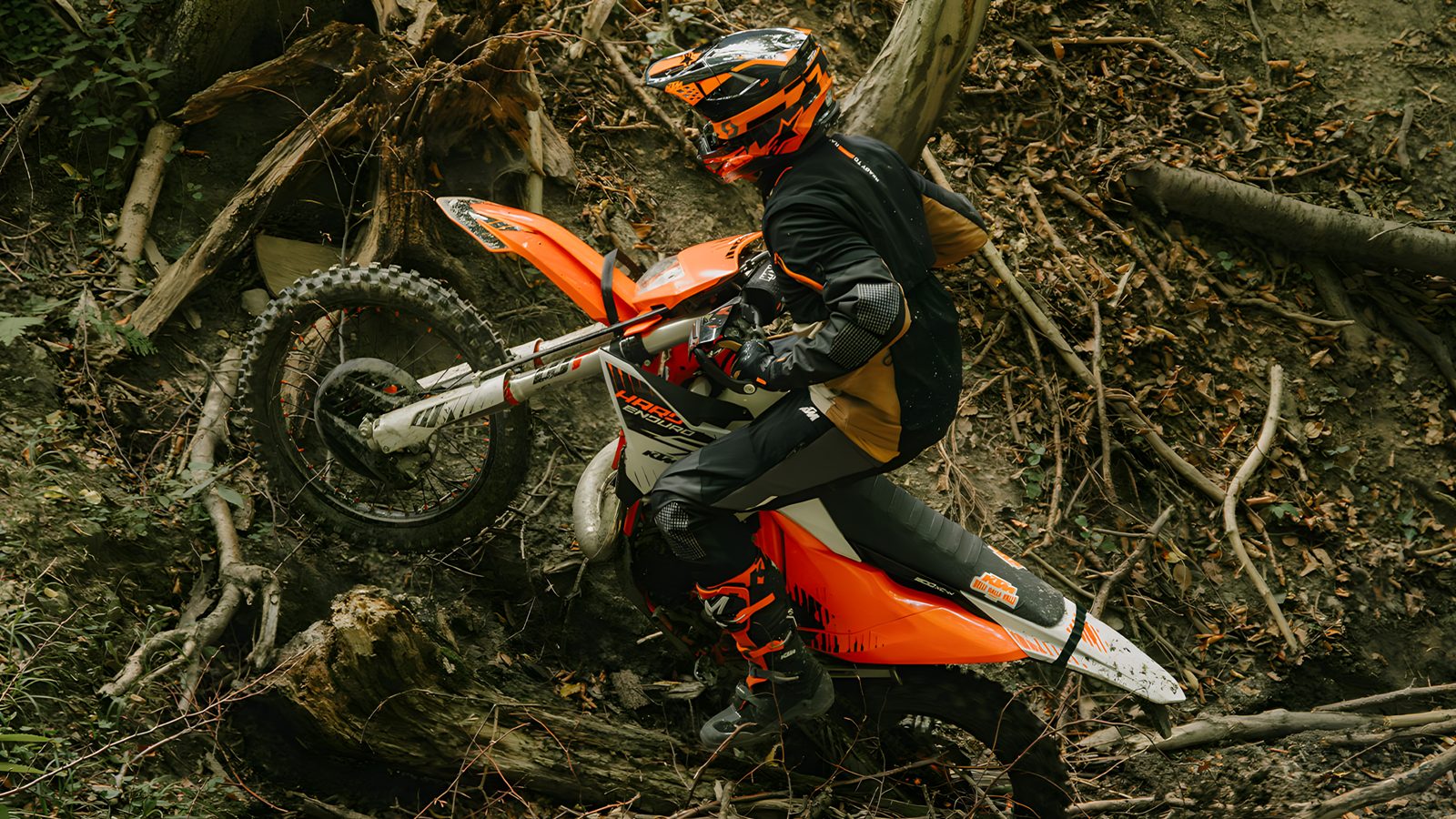
- Regulatory Circumvention: Enduro motorcycles were certified and homologated in a highly restricted configuration to meet European regulatory standards. Modifying them post-certification could mean the bikes emit higher emissions and noise levels than recorded during approval.
KTM’s Response: “A Fundamental Misunderstanding”
KTM AG has issued a strong statement completely denying that they place illegal motorcycles onto the market, stating that they sell vehicles exclusively in compliance with European rules.
The manufacturer argued that the media reports are based on a “fundamental misunderstanding” of what enduro motorcycles actually are. KTM points out that all KTM, Husqvarna, and GasGas branded enduro models leave the factory in a fully homologated, compliant, and road-legal condition.
However, the brand’s explanation of what happens next aligns closely with the physical actions uncovered by the journalists, though they dispute the intent:
- Post-Purchase Conversion: KTM maintains that any competition-focused or off-road reconfiguration is carried out exclusively after purchase, solely at the customer’s explicit request.
- Loss of Road Legality: The company insists that buyers are expressly informed that any such conversion results in the motorcycle completely losing its road-legal status, restricting its operation strictly to off-road or competition environments.
- FIM Compliance: KTM states that homologation is a necessity because certain FIM competition regulations require racing motorcycles to be delivered in a road-legal specification, meaning the bikes must satisfy both public-road registration and competition requirements.
Why are Enduro Motorcycles at the Centre of the Row?
Unlike conventional road bikes, enduro models are dual-purpose machines designed to handle both public roads and off-road environments.
KTM noted that these specialised enduro models only account for approximately 3 per cent of its global sales volume. Because they are typically used for competition and sport, they generally cover significantly lower annual mileages than mainstream road-going motorcycles.
What Lies Ahead for KTM?
As things stand, local authorities are reportedly probing the company and its European dealerships following the high-profile media coverage. However, it is vital to note that no regulatory or vehicle-homologation authority has publicly concluded that KTM has breached any official European emissions or type-approval laws.
These breaking allegations land at an incredibly sensitive time for the manufacturer. KTM is currently trying to navigate its way through a very rocky period, only just emerging from severe insolvency issues brought on by gross financial mismanagement. The brand was saved at the eleventh hour through a major financial restructuring and acquisition by Indian motorcycling giant, Bajaj. On top of that, the company is still actively trying to clear a monumental stockpile of older motorcycle models currently sitting on dealership lots.