

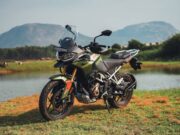
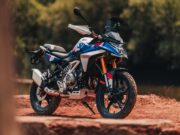







The all-new Norton Atlas and Norton Atlas GT represent a beautifully clean, modern, and quintessentially British take on adventure and sport-touring motorcycling. The company recently unveiled the specifications for these models and while that was a much welcome move, it created some confusion on the differences between the 2 variants and the sub-versions available for each.
It essentially is two core models, the Atlas and the Atlas GT and their respective premium Apex variants hitting the tarmac, it is time to look under the skin of these parallel-twins to see exactly how they differ.
The Shared Core
Before diving into what splits these two models, it is worth looking at the shared mechanical architecture that makes this platform so fascinating.
The Powertrain
Both motorbikes are powered by a characterful 585cc liquid-cooled parallel-twin engine featuring a 270° crankshaft configuration. This layout gives the bikes a distinct firing order and plenty of usable torque. It puts out a healthy 69 bhp at 9,300 rpm and 57.5 Nm of peak torque at 7,300 rpm.
The engine uses a high-strength steel trellis frame as a stressed member and comes packed with smart engineering:
- Advanced Internals: Segment-first atmospheric plasma spray (APS) coated cylinder surfaces to reduce friction.
- Premium Packaging: A single-sprocket DOHC layout, curved radiator, twin oil pumps, and a protected air-intake system.
- Slick Shifting: A 6-speed gearbox paired with an Assist & Slip multiplate wet clutch and a bi-directional up/down Quick Shifter as standard.
The Tech
Riders get a massive 8-inch full-colour touchscreen TFT display (720p resolution) featuring turn-by-turn navigation, multimedia control, GoPro connectivity, and over-the-air (S-OTA/F-OTA) updates via the Norton Rider app.
Safety is managed by a top-tier Bosch six-axis Inertial Measurement Unit (IMU) that coordinates lean-sensitive ABS, cornering traction control, cornering cruise control, rear-wheel slide control, wheelie control, and drag torque control across five riding modes (Urban, Rain, Sport, Tour, and Enduro). Stopping power is handled by twin semi-floating 310 mm front discs paired with radial Bybre callipers and a 270 mm rear disc.

Norton Atlas vs. Norton Atlas GT: What Are the Key Differences?
While they share the same heart, Norton has tuned these two motorbikes to project completely different riding personalities. One is an adaptable explorer, while the other is a sharp-steering asphalt weapon.
1. Wheels and Tyres
The standard Atlas is configured for multi-surface adaptability, running a 19-inch front and 17-inch rear aluminium alloy wheel combo wrapped in Eurogrip Explo R Plus tyres.
The Atlas GT is targeted squarely at sustained touring and fast A-road riding, swapping that setup for 17-inch cast-alloy wheels front and rear. This allows for sharper steering precision and a much broader selection of pure road tyres.
2. Suspension Travel and Tuning
Both bikes feature fully adjustable 43 mm KYB USD front forks and a fully adjustable KYB rear monoshock with an intuitive, hand-operated hydraulic preload adjuster. However, the travel numbers are wildly different:
- Norton Atlas: Offers 180 mm of wheel travel at both the front and rear, alongside 220 mm of ground clearance to cushion rough trails and uneven terrain.
- Norton Atlas GT: Drops the travel down to 140 mm at both ends. The damping and geometry are tuned strictly to prioritise road feedback and cornering composure.
3. Seat Height and Stance
Because of the variance in suspension travel and wheel sizes, accessibility shifts significantly between the two models. The dual-purpose Atlas stands tall with a seat height of 845 mm, giving it a commanding view of the road. The street-focused Atlas GT drops the saddle down to a much more manageable 815 mm, offering greater confidence and an easier reach to the ground when filtering through traffic.
4. Weight
Shedding the off-road hardware makes a difference on the scales. The standard Atlas hits the scales with a wet weight (minus fuel) of 188 kg, positioning it at the lighter end of the middleweight adventure category for optimal agility.
Stepping Up to the Premium Apex Variant
If the standard versions of the Atlas and Atlas GT aren’t quite enough, Norton offers the top-spec Apex trim for its models. This variant adds a layer of high-end luxury and active electronic safety nets that aren’t present on the base bikes.
Choosing the Apex variant adds a host of premium features:
- Advanced Safety Tech: Upgrades the electronic suite to include Bosch’s electronic combined braking and Vehicle Hold Control (hill-hold assist). TPMS is also added.
- Extended Comfort: Integrated heated grips and an easy-adjust touring windscreen to shield you from highway wind blast.
- Luggage Readiness: A factory-fitted rear luggage frame with an integrated pillion handle kit and additional passenger support.
- Premium Lighting: LED cornering lights to illuminate dark bends and an LED puddle lamp to assist with low-lit parking conditions.
- Protection and Styling: Swaps the plastic protective base cover for an upgraded aluminium integrated bash plate and all-terrain sump protection kit.
- Unique colour: Exclusive paint options like the Glacier Blue.
- Slightly Heavier: A wet weight (no fuel) of 192 kg for Atlas Apex.
The standard Atlas is available in clean colour options like Matrix Black and Trophy Silver (with Verona Green and Sinopia Orange available as higher cost options). Whether you want the trail-ready 19-inch stance of the standard Atlas or the low-slung, corner-carving nature of the 17-inch Atlas GT, Norton has delivered a premium, mechanically honest alternative to the middleweight status quo.
Norton Atlas vs. Norton Atlas Apex Specification Comparison
| Category | Specification / Feature | Norton Atlas (Base) | Norton Atlas Apex |
| Engine | Type | Liquid-cooled 585cc DOHC 270º crank parallel twin | Liquid-cooled 585cc DOHC 270º crank parallel twin |
| Bore & Stroke | 78mm x 61.2mm | 78mm x 61.2mm | |
| Compression Ratio | 12.2:1 | 12.2:1 | |
| Fuel System | Multi-point sequential fuel injection, ride-by-wire | Multi-point sequential fuel injection, ride-by-wire | |
| Performance | Max Power | 69 BHP / 70 PS / 51.5 kW @ 9,300 rpm | 69 BHP / 70 PS / 51.5 kW @ 9,300 rpm |
| Max Torque | 57.5 Nm / 42 ft-lb @ 7,300 rpm | 57.5 Nm / 42 ft-lb @ 7,300 rpm | |
| Exhaust | Type | Steel 2-into-1 system with upswept silencer | Steel 2-into-1 system with upswept silencer |
| Transmission | Gearbox & Quick Shift | 6-speed with bi-directional up/down Quick Shift | 6-speed with bi-directional up/down Quick Shift |
| Clutch | Cable-operated Assist & Slip multiplate wet clutch | Cable-operated Assist & Slip multiplate wet clutch | |
| Chassis | Frame & Swingarm | Steel trellis frame; Cast aluminium swingarm | Steel trellis frame; Cast aluminium swingarm |
| Seat Configuration | One-piece rider & pillion seat | One-piece rider & pillion seat | |
| Suspension | Front Suspension | KYB 43mm USD forks, 180mm travel, fully adjustable | KYB 43mm USD forks, 180mm travel, fully adjustable |
| Rear Suspension | KYB monoshock RSU, 180mm travel, adjustable tension damping, hydraulic preload adjustment | KYB monoshock RSU, 180mm travel, full hydraulic adjustment | |
| Brakes | Front Brakes | 2x 310mm semi-floating discs, radial Bybre calipers | 2x 310mm floating discs, radial Bybre calipers |
| Rear Brake | 270mm rear disc, Bybre caliper | 270mm rear disc, Bybre caliper | |
| Wheels & Tyres | Front Wheel Size | Cast alloy / Spoked steel, 19” x 2.50” | Cast alloy / Spoked steel, 19” x 3.00” |
| Rear Wheel Size | Cast alloy / Spoked steel, 17” x 4.00” | Cast alloy / Spoked steel, 17” x 4.50” | |
| Tyres (Front/Rear) | Eurogrip Explo R Plus (110/80 ZR19 / 150/70 ZR17) | Eurogrip Explo R Plus (110/80 ZR19 / 150/70 ZR17) | |
| Sprocket Size | X-ring 116 Chain, 16T Front Sprocket, 47T Rear Sprocket | X-ring 116 Chain, 16T Front Sprocket, 47T Rear Sprocket | |
| Dimensions | Wet Weight (no fuel) | 188 kg | 192 kg |
| Fuel Capacity | 15.4 litres / 3.39 Gal (Imp) / 4.07 Gal (US) | 15.4 litres / 3.9 Gal (Imp) / 4.1 Gal (US) | |
| Seat Height / Ground Clearance | 845 mm / 220 mm | 845 mm / 220 mm | |
| Wheelbase / Rake / Trail | 1465 mm / 25.7º / 101.7 mm | 1465 mm / 25.7º / 101.7 mm | |
| Economy | Fuel Consumption | 23 kmpl / 65 mpg (Imperial) / 54 mpg (US) | 23 kmpl / 65 mpg (Imperial) / 54 mpg (US) |
| Design / Body | Protection & Bodywork | Plastic protective cover (Base) | Rugged plastic bash plate + All-terrain aluminium sump protection kit |
| Levers & Screen | Adjustable brake and clutch levers; Standard screen | Adjustable hand & foot levers; Easy-adjust windscreen | |
| Utility | Standard layout | Rear luggage & pillion handle kit | |
| Lighting | Standard Layout | LED twin-projector headlamps with DRL; Handguard-integrated indicators; 3-in-1 taillight | LED twin-projector headlamps with DRL; Handguard-integrated indicators; 3-in-1 taillight |
| Advanced Visibility | Not Standard (Available as accessory) | LED cornering lights & LED puddle lamp | |
| Electronics | Dashboard | Full-colour 8” touchscreen TFT display (720p) | Full-colour 8” touchscreen TFT display (720p) |
| Connectivity | Bluetooth & Wi-Fi, Turn-by-turn navigation, GoPro control, Norton Rider App, S-OTA & F-OTA updates | Bluetooth & Wi-Fi, Turn-by-turn navigation, GoPro control, Norton Rider App, S-OTA & F-OTA updates | |
| Convenience Tech | Keyless ignition (lock, seat, fuel cap), USB-C charger | Keyless ignition, USB-C charger, TPMS, Integrated heated grips | |
| Rider Aids | IMU Architecture | Bosch 10.3MB 6-axis IMU | Bosch 10.3ME 6-axis IMU |
| Ride Modes | Urban, Rain, Sport, Tour, Enduro | Urban, Rain, Sport, Tour, Enduro | |
| Core Cornering Aids | Drag Torque (N-DTC), ABS (N-ABS), Tractive Effort (N-TEC), Dynamic Cruise (N-DCC), Wheelie (N-TWC), Rear Lift (N-RLC), Rear Slide (N-RSC) | Drag Torque (N-DTC), ABS (N-ABS), Tractive Effort (N-TEC), Dynamic Cruise (N-DCC), Wheelie (N-TWC), Rear Lift (N-RLC), Rear Slide (N-RSC) | |
| Premium Safety Aids | Not Available | Vehicle Hold Control (N-VHC) & Electronic Combined Braking (N-ECB) | |
| Warranty | Coverage Suite | 36 months unlimited mileage (UK/EU); 30,000 miles (USA); 12-month/6,000-mile service intervals | 36 months unlimited mileage (UK/EU); 30,000 miles (USA); 12-month/6,000-mile service intervals |
| Colours | Paint Scheme Options | Matrix Black, Trophy Silver, Verona Green (cost option), Sinopia Orange (cost option) | Matrix Black, Trophy Silver, Verona Green, Sinopia Orange, Glacier Blue (cost option) |