





















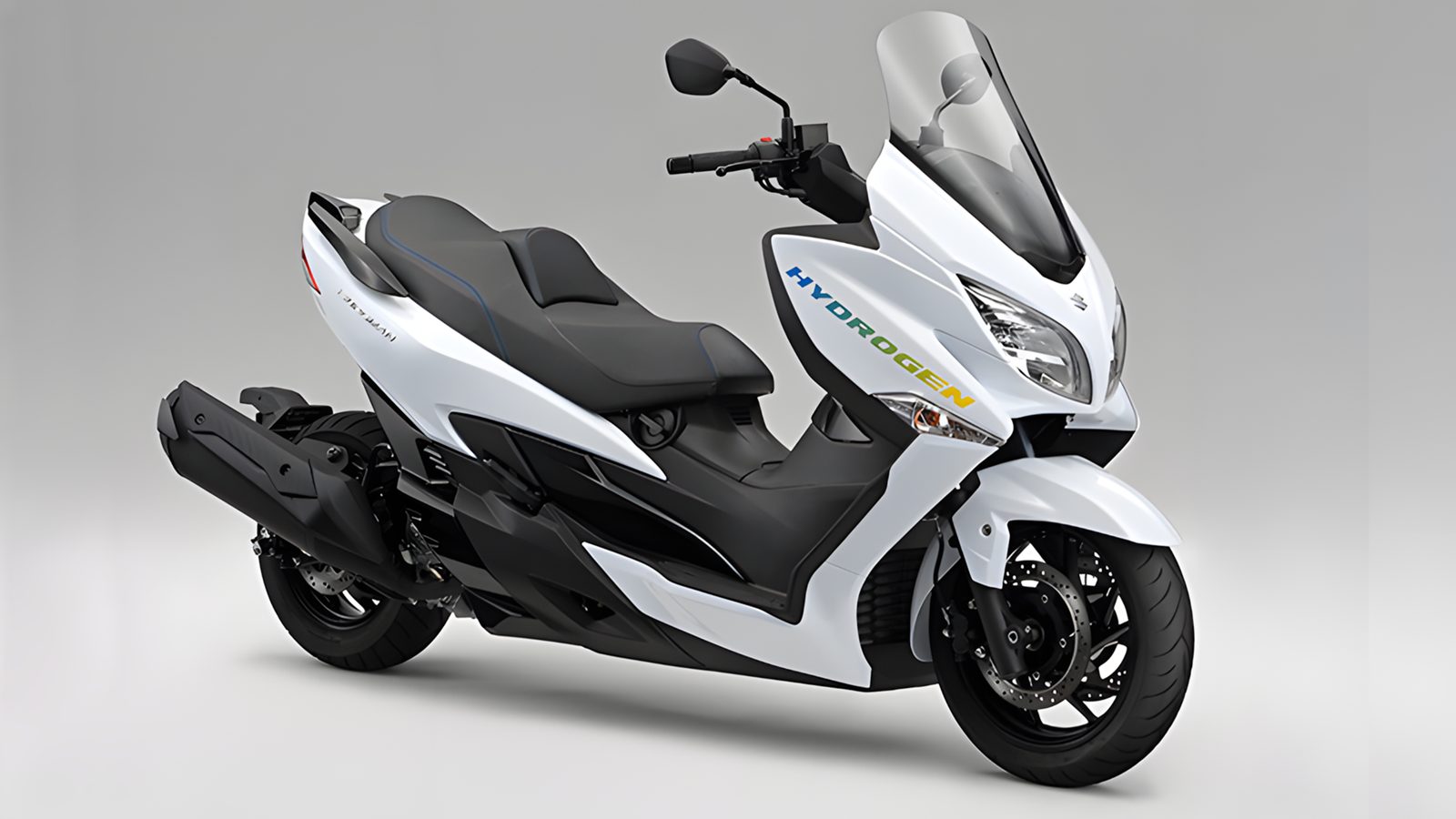
It looks like the world’s biggest car maker is thinking small—well, two-wheeled small. Toyota Motor Corporation has recently sparked a bit of a buzz by filing a Toyota patent for a hydrogen-powered scooter. While Toyota is famous for championing hydrogen fuel cells in cars, this latest move shows they are serious about bringing that “green” energy to the world of urban mobility.
The patent doesn’t just show a fancy idea; it actually borrows the silhouette of a familiar face: the Suzuki Burgman prototype. Given that both Toyota and Suzuki are part of the HYSE (Hydrogen Small Engine) project in Japan, it’s a fair bet the two giants are putting their heads together to solve the two-wheeled hydrogen puzzle.
The “Coffee Pod” Approach to Refuelling
The most clever bit of this patent is how Toyota plans to get fuel into the bike. Instead of making riders faff about with high-pressure gas pumps, they’re proposing replaceable, pre-filled hydrogen canisters.
- How it works: You’d pull into a station, swap your near-empty tank for a fresh one, and be on your way in seconds.
- The Problem: On previous prototypes like the Suzuki Burgman, the tank sat low in the frame for a better centre of gravity, but that made it a nightmare to reach for a swap.
- The Solution: Toyota’s patent shows the tank mounted in a hinged cradle that pivots out to the side, or a scissor-action arm that moves the canister away from the bike’s body for easy access.
Tech Under the Seat: Fuel Cells vs. Combustion
While some hydrogen bikes use combustion engines, Toyota’s design focuses on a hydrogen fuel cell. This reacts hydrogen with oxygen to create electricity, leaving nothing but water as exhaust.
- Efficiency: Fuel cells are more efficient than combustion engines, meaning you get more range from a smaller, lighter tank.
- Reliability: The canister system keeps the fuel pure, which is vital because even tiny contaminants can ruin a sensitive fuel cell.
- Hybrid Power: The patent hints at a power management unit that teams the fuel cell up with a small lithium-ion buffer battery to help with quick acceleration and regenerative braking.
Why Hydrogen for Scooters?
In busy cities across Europe and Asia, scooters are everywhere, but they often lack the fancy emission controls found in cars. A hydrogen-powered scooter could be a game-changer for urban air quality:
- Zero Emissions: No NOx, no particulates—just water.
- Quick Fills: Unlike electric scooters that can take hours to charge, hydrogen takes seconds to refuel.
- Performance: Hydrogen stays solid in extreme temperatures, whether it’s freezing or sweltering.
The Road Ahead: Challenges and Safety
It isn’t all smooth riding just yet. High-pressure tanks (sitting at a whopping 70 MPa or 10,000 psi) need to be incredibly strong, which adds weight and cost. There’s also the hydrogen infrastructure to think about; most current stations are built for cars, with nozzles that don’t quite fit a scooter.
While we might not see a Toyota scooter in showrooms tomorrow, this patent is a massive signal. By shrinking their automotive tech down to scooter size, Toyota is proving that if we’re going to have a “hydrogen society,” it needs to work for everyone—from the lorry driver to the city courier.