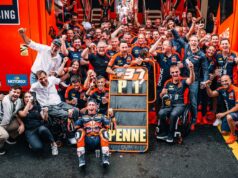






Ducati’s iron grip on MotoGP finally showed signs of slipping at the Czech GP in Brno, and the stats don’t lie. For the first time in 66 races, only two Ducati riders made it into the top 10—winner Marc Marquez and Pecco Bagnaia, who grabbed fourth. That’s a huge change from the last few years, where you could bet money on a handful of Ducatis dominating the leaderboard every Sunday.
This streak stretches all the way back through 2024, 2023, and most of 2022. The last time we saw so few Ducatis up front was at Portimao in 2022, when they had a whole army—eight bikes—on the grid. At Brno 2025? Just five, after injuries and some bad luck wiped out their numbers: Alex Marquez crashed, Fermin Aldeguer took a penalty, and Fabio di Giannantonio couldn’t fight his way forward. So close to keeping their top 10 streak alive, but not quite.
Ducati’s run of dominance started picking up serious steam after Fabio Quartararo grabbed the 2021 title for Yamaha. Pecco Bagnaia delivered Ducati’s first championship in 15 years back in 2022, then doubled up the following season. Last year, Pramac’s Jorge Martin stole the crown—still on a Ducati.
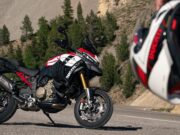
For most of the past three years, Ducati’s Desmosedici was basically the dream ride—fast, planted, and envied by every other team. Even Marquez found himself reborn after years wrangling a Honda. But 2025 brought a new headache: neither Bagnaia nor Marquez felt right with the latest engine during pre-season, so Ducati ditched it. The GP25 model is still quirky, with gremlins that Bagnaia and Di Giannantonio haven’t solved, while the older GP24 has let Alex Marquez outshine his teammate at times.
Meanwhile, rivals have stepped up hard. Marco Bezzecchi nailed a win for Aprilia, KTM packed the top 10 with three hungry riders, and Yamaha put both Quartararo and Jack Miller in the mix. Only Honda missed out on a top 10 this weekend. So while Ducati’s still got the world champion, Brno made it loud and clear: the gap at the top is shrinking fast
Marc Marquez’s unique riding genius transformed the Honda MotoGP bike into a razor-sharp weapon—so sharp, in fact, that only he could really tame it. Over years of development, Honda leaned heavily on Marquez’s feedback, tweaking the RC213V to perfectly match his wild, front-end-heavy riding style. For Marquez, the trade-off was simple: he’d rather have a bike that was hard to ride but fast, and he had the skill and nerve to extract every drop of performance from it—even if it meant living on the edge and saving monster crashes that would floor most mortals. The unintended result? Other top riders, including world champions, found the Honda borderline unridable—too twitchy, unstable on corner entry, and physically demanding. While Marquez racked up victories, teammates and rivals struggled, and when he was sidelined by injury, Honda’s results nose-dived. In trying to build the perfect Marquez machine, the RC213V became so finely tuned to his style that, for everyone else, it turned into a “rider-eater” few could handle and eventually even he could not handle it.
While Ducati’s Desmosedici has long been the envy of the grid with its all-round ability, there are early signs that Marquez’s style and demands could steer its evolution in ways that echo his Honda legacy.
- Aggressive Front-End Focus: Marquez is notorious for preferring a strong, planted front end that allows him to dive late on the brakes and tip in aggressively—even if it makes the bike a handful for mere mortals. Ducati might start prioritizing his need for stiff, responsive steering geometry and suspension setups, even if that compromises rear-end grip or rider comfort for others.
- Chassis Evolution: Already there’s speculation that tweaks to the 2025 Desmosedici chassis may have favored Marquez’s “point-and-shoot” riding, possibly sacrificing the front-end feedback and forgiving balance others need. This could make the Ducati less accessible to riders with smoother, corner-speed styles.
- Tailored Electronics: Marquez’s ability to ride the limit could push Ducati’s engineers toward creating traction control and engine mapping settings that give maximum performance at the risk of stability. Just as at Honda, this could leave teammates and satellite riders wrestling with a bike that is blindingly quick—but only if you have Marquez-level bravery and skill.
- Potential Consequences: If Ducati development leans too heavily into Marquez’s strengths, there’s a risk of repeating Honda’s cycle: a brilliant package for one rider, but a “high-wire act” for everyone else. That could mean Ducati dominance—if Marc stays fit—or a scenario where the rest of their roster is left struggling with a bike only the master can command.
Marquez could transform Ducati into his own winning machine, but history shows there’s a fine line between genius and exclusivity when it comes to MotoGP bike development. If the Ducati becomes too Marquez-centric, rivals might start calling it “the new Honda”—and not in a good way.