




















When riders talk about a motorbike’s “character”, they are rarely pointing to a single row of numbers on a spec sheet. It is not just down to peak horsepower, torque curves, or fast lap times. Rather, it is the visceral connection, the physical feel, and above all, the acoustic imprint left in memory. For more than seven decades, Honda motorcycles have been defined by internal combustion, and behind the scenes, a dedicated discipline ensures that no two machines sound or feel quite the same.
From the drawing board all the way to final assembly, Noise, Vibration, and Harshness (NVH) engineers play an integral role at every stage of development. Their goal is straightforward yet technically demanding: ensuring the right acoustic personality across Honda’s entire two-wheeled lineup. While modern digital modelling tools certainly support the process, traditional hands-on methods and the human ear still reign supreme.
Born at the First Spark: The Acoustics of Combustion
Acoustically speaking, an engine’s personality is not created at the tailpipe; it is forged at the precise instant of combustion. According to NVH development engineer Tatsumi-San, riders first register the sensation of combustion during the intake interval—that split-second stroke inside the motor where the crankshaft turns, the piston travels from top dead centre down to the bottom of its cycle, and the intake valves open. This initial impression establishes an immediate expectation of how the engine will respond and behave as revs climb and drop.
Tatsumi-San emphasises that creating this pulse sensation authentically is practically impossible through anything other than the physical combustion process itself. It cannot simply be synthesized with clever cosmetic additions or electronic fakery.
This logic makes early collaboration non-negotiable. Once base combustion parameters—such as valve timing, ignition advance, and internal geometry—are locked in, the boundaries of an engine’s acoustic personality are set. An exhaust system can certainly amplify or soften specific frequencies, but it cannot invent traits out of thin air.
Engineering Logic Over Emotional Notes
While one might imagine sound designers drawing inspiration from symphonies or natural landscapes, Tatsumi-San notes that engine acoustics are guided strictly by engineering logic rather than emotional motifs. The true craft lies in refinement: isolating and amplifying the desirable acoustic properties of combustion while suppressing unwanted resonance.
Because sound is ultimately a subjective, sensory evaluation, establishing firm design targets poses an intriguing engineering challenge. Certain motorcycle models require rigid compliance with strict numerical acoustic metrics, whereas others leave room to focus purely on emotional rider appeal.
Honda analyses sound profiles from two distinct vantage points:
- The rider’s ear: Focusing on immediate sensory feedback, throttle responsiveness, and intake growl.
- Third-party observers: Taking into account how the machine sounds to pedestrians and other road users in busy urban environments.
Engineers meticulously map frequency spectrums, decibel levels, throttle reaction, and the subtle variations in sound that distinguish one Honda powerplant from another.
Shared Architecture, Distinct Personalities: CB1000F vs Hornet
The power of NVH engineering becomes particularly apparent when several motorcycles share the same foundational engine architecture. Tatsumi-San points to the contrast between machines such as the CB1000F and the Hornet.
By altering camshaft specifications, engineers dramatically transform how the combustion process feels and sounds:
- One configuration favours a deep, rumbling low-end cadence.
- The other delivers a sharper, high-revving, sporty rush.
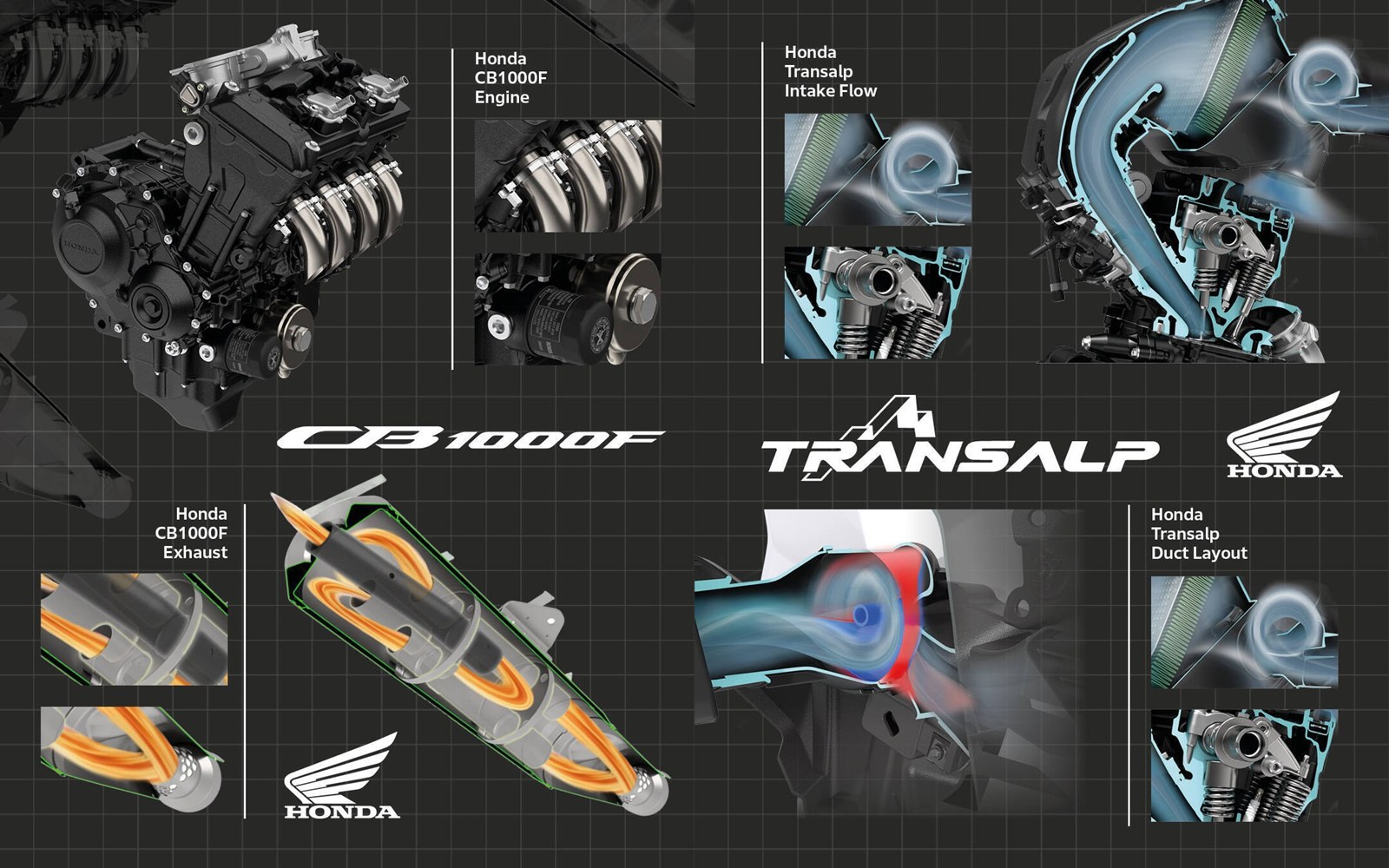
On the CB1000F, this transformation goes right into the engine’s plumbing. Cylinders 1 and 2 utilise 50 mm intake runners, while cylinders 3 and 4 feature narrower 40 mm intake runners. This asymmetry is paired with a deliberate 17-degree offset in valve timing, producing an uneven, distinctive “heartbeat” sound wave generated entirely by mechanical components.
The Exhaust as a Selective Filter
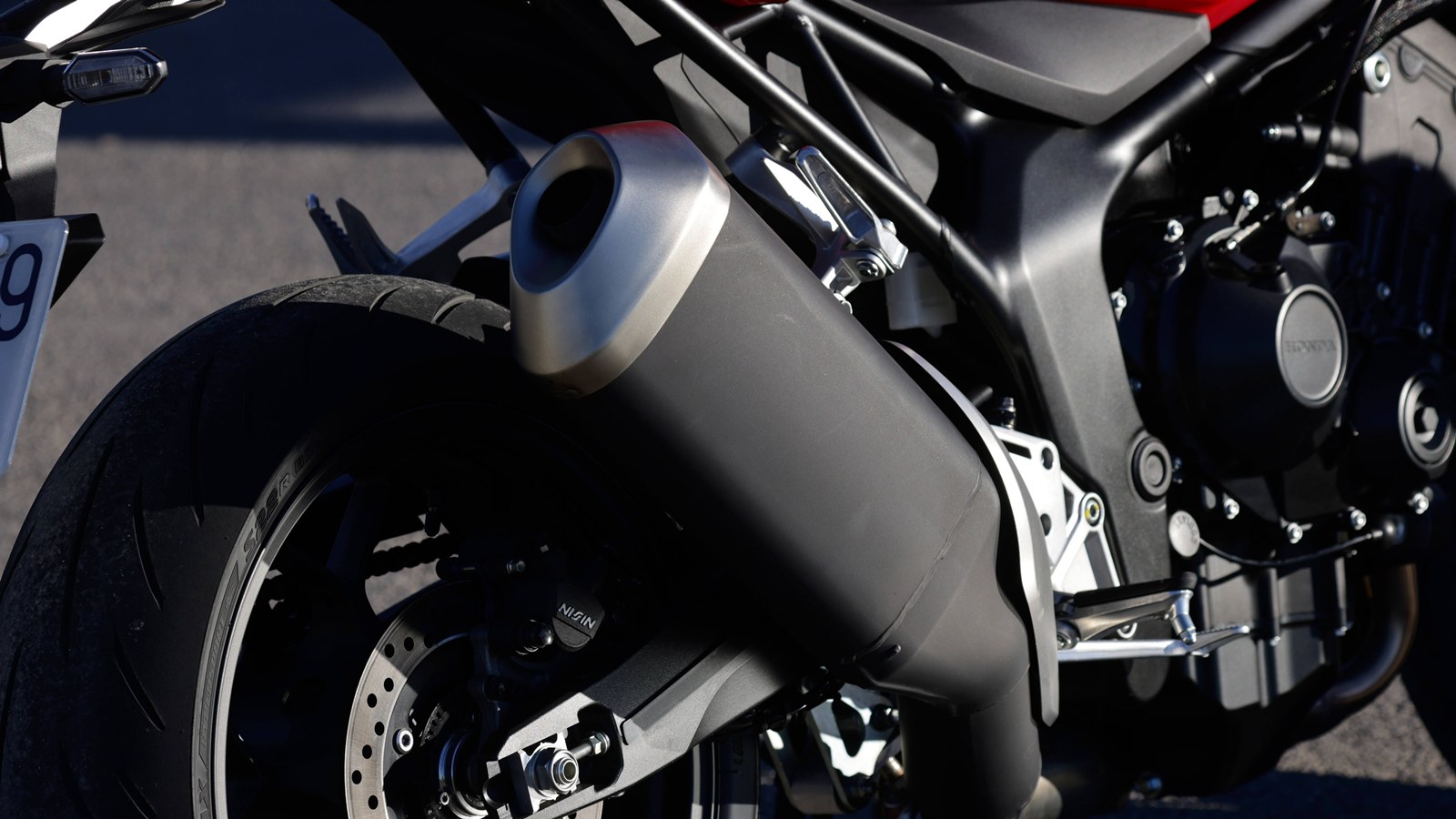
Despite its visual prominence, the exhaust system’s mechanical purpose is often misunderstood. As Tatsumi-San points out, the exhaust functions fundamentally as a silencer. Rather than generating tone, its primary job is removing undesirable noise frequencies. By selectively damping specific frequencies—often pruning low drone while preserving crisp, high-frequency notes—engineers spotlight the raw character born inside the cylinders.
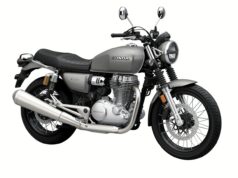
Even stylistic details, such as the megaphone-style silencer on the CB1000F, adhere to this engineering discipline. Although exterior aesthetics may dictate its outward form, the acoustic signature is shaped internally. For the CB1000F, Honda purposefully tuned the internal muffler baffle structure toward lower frequencies to reinforce the motorcycle’s muscular presence.
Human Ear Meets Hardware Testing
Digital simulations can plot response curves, decibel ceilings, and frequency distributions, but Honda’s development team never relies solely on digital readouts. Final decisions rest squarely on human perception during physical prototype testing. A sound profile must reflect not only target decibel limits, but the entire vehicle concept—how the machine behaves, responds, and feels as an integrated whole.
This meticulous approach involves extensive trial and error. During the development of the CB750 Hornet, the engineering team tested nearly a hundred distinct exhaust patterns to evaluate acoustic nuances. Each version explored subtle variations in internal baffling, frequency attenuation, and interactions with combustion pulses.
Modern electronics also play a role, but strictly as an enabler rather than an artificial sound generator. Tatsumi-San makes it clear that Honda has never used electronic audio enhancement to manufacture artificial notes. Instead, ride-by-wire throttle mapping and selectable riding modes give riders convenient access to different facets of the engine’s natural mechanical character, allowing for a more aggressive soundtrack only when conditions suit.
The Standout Twins: Hornet and Transalp 750
When reflecting on projects of particular pride, Tatsumi-San highlights the mid-capacity parallel-twin platform that debuted for the 2023 season: the CB750 Hornet and the XL750 Transalp.
For these models, Honda engineered dual tailpipe exits tuned to two different frequencies. As the revs build, the interplay between the two outlets generates an engaging, rhythmic pulsation that has resonated strongly with riders worldwide—proving that authentic acoustic character remains one of the most compelling elements of the motorcycling experience.